
Dotwork Tattoo Berlin: Dotted Shading, Mandalas and Durability
Dotwork tattoos in Berlin: how dotted shading creates depth, which motifs work best, how durable dotted work really is and what to check before booking.
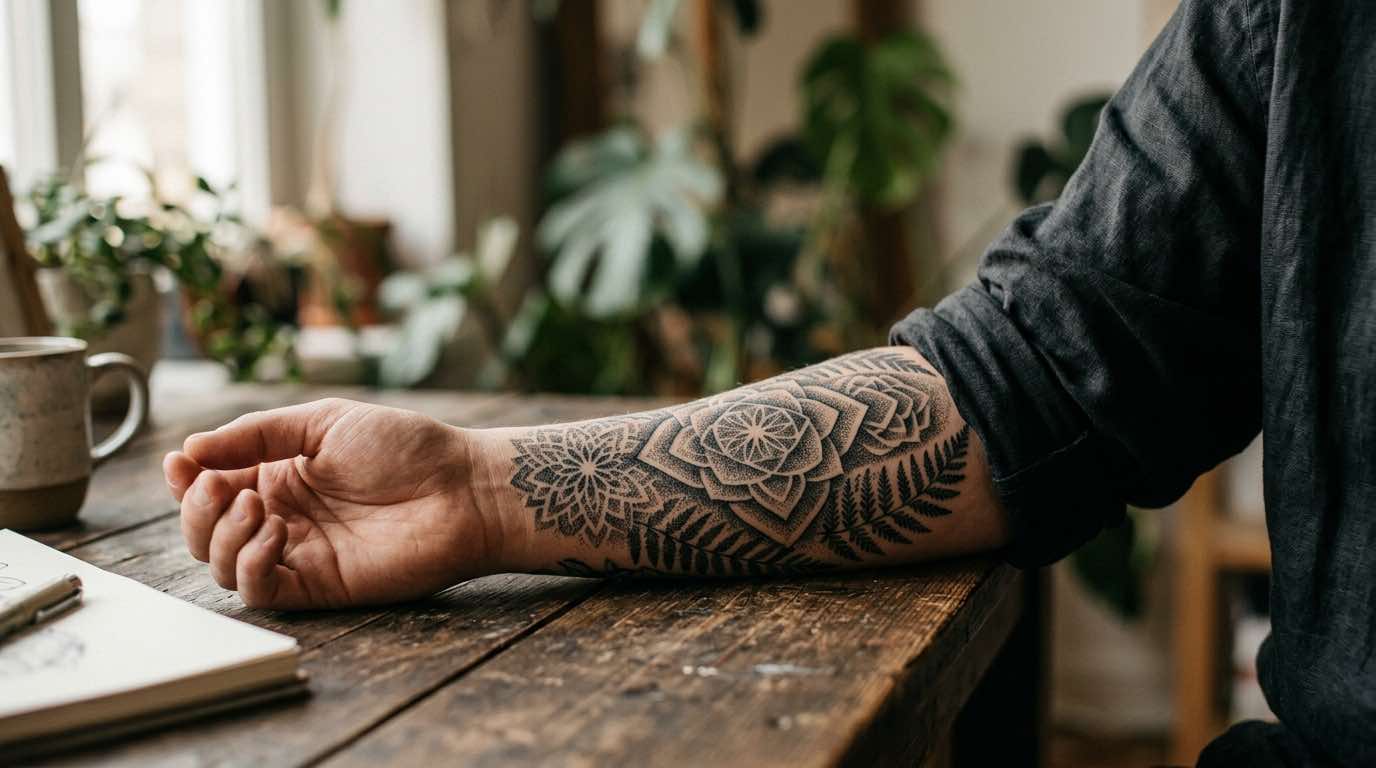
Dotwork is more than a technique. It is its own visual language: shape, depth and shading are not built from filled areas but from many single dots that turn into textures and soft gradients. This guide covers what defines the style, how it differs from blackwork, which motifs and placements work, how durable dotted work really is and what to check before booking in Berlin.
What defines Dotwork
Dotwork follows a simple principle and a demanding craft: dot density steers depth, transitions stay soft because no visible strokes are used, and the whole surface reads graphic rather than painted. Because every irregularity in the grid is visible, the technique needs time, patience and a steady hand.
That combination is exactly why dotwork motifs feel calm. The eye reads texture and rhythm instead of flat colour, which makes the style work especially well for ornamental and geometric compositions.
Dotwork, blackwork, tribal and geometry: the differences
Dotwork is shading built from dots: soft, textured and detailed. Blackwork works with solid black areas and hard contrast: graphic, bold and very present. Maori and tribal patterns work with shapes that carry cultural origin and follow the body flow. Geometry lives from exact shapes and lines: precise, symmetric, quiet.
In practice these directions are often combined. The most common mix is dotwork plus blackwork: hard black accents that frame and support a soft field of dots, so the grey scale stays readable instead of drifting into haze.
Motifs, placements and healing
Mandalas, geometric patterns, spiritual symbols, ornamental compositions, animal motifs and portraits with soft transitions all work particularly well. Forearm and wrist are popular because they are visible and well supplied with blood, the upper arm offers space for larger mandalas, and thigh, calf and back carry big symmetric compositions.
On constantly moving or very thin areas such as fingers, dotwork is technically harder and fine structures lose definition faster. Fully healed, honest photography in a portfolio matters here: it shows how the grid and the transitions behave on real skin rather than in idealised references.
Durability and how to judge good dotwork
Dotwork can be very durable when the basics are right. Size matters because small and overly dense dot fields go soft over the years. Contrast matters because a clear frame of lines or accents supports the dot scale. Placement matters because the forearm and thigh are calmer than ribs or fingers, and UV light flattens every structure over time, which is why sun protection is part of the design decision, not an afterthought.
Good dotwork shows an even dot grid without restless patches, soft transitions that are still readable, and a motif that you can still recognise from one metre away. Point work is time-intensive, so two motifs of the same size can differ massively in session time depending on density and detail.
Useful next steps
Tattoo Prices Berlin
Price ranges, cost factors and budget planning for your tattoo idea.
Walk-In Tattoo Berlin
Spontaneous tattoos, suitability and the best way to plan a same-day visit.
Cover-Up Tattoo Berlin
Feasibility, limits and honest guidance for older tattoos.
Tattoo Artists
Find the right artist for style, motif and project scope.
Frequently asked questions
What is a dotwork tattoo?
In dotwork, shape, depth and shading are built from many single dots. That creates calm textures and a graphic look between ornament, geometry and illustration.
Is dotwork the same as blackwork?
No. Blackwork uses solid black areas and hard contrast. Dotwork is a technique that builds texture and gradients from dots. Both combine very well.
Which motifs suit dotwork best?
Mandalas, geometric patterns, spiritual symbols, ornamental compositions, animal motifs and portraits with soft transitions work especially well.
Does dotwork fade faster than other styles?
Not automatically, but fine dot structures can read softer over the years. The deciding factors are suitable size, a calm body placement and consistent sun protection.
What does a dotwork tattoo cost in Berlin?
Point work is time-intensive because every structure is built individually. Small motifs are easy to plan, while large mandalas or very detailed compositions need considerably more session time.